📊 Reliance Smart Classroom Initiative in India

The Reliance Smart Classroom Initiative is a transformative CSR program led by Reliance Industries Limited through its social development arm, Reliance Foundation. This initiative focuses on integrating modern technology into traditional classrooms, ensuring that students across India—especially in rural and underserved regions—receive access to high-quality, digital-first education.
India’s education system has long faced challenges such as outdated teaching methods, lack of infrastructure, and limited access to quality learning resources. The smart classroom initiative directly addresses these issues by introducing interactive, engaging, and technology-enabled learning environments. Instead of passive learning through textbooks, students are now exposed to multimedia content, real-time demonstrations, and interactive lessons that enhance comprehension and retention.
One of the most impactful aspects of this initiative is its focus on government schools. These schools often lack basic facilities, let alone digital infrastructure. By equipping them with smart boards, projectors, and internet connectivity, Reliance CSR is helping bridge the gap between private and public education systems. This ensures that students from economically weaker backgrounds are not left behind in the digital age.
Moreover, the initiative emphasizes holistic development. It is not just about installing hardware but also about creating a complete ecosystem that supports digital learning. This includes teacher training, content development, and continuous monitoring of outcomes. Teachers are trained to effectively use technology in classrooms, making lessons more engaging and interactive.
Another critical dimension is scalability and sustainability. Reliance Foundation designs its smart classroom projects in a way that they can be replicated across different regions. The goal is to create a model that can be adopted nationwide, contributing to large-scale educational reform.
Additionally, the initiative aligns with national missions like Digital India, which aims to transform India into a digitally empowered society. By supporting digital education at the grassroots level, Reliance is playing a vital role in achieving this vision.
In conclusion, the Reliance Smart Classroom Initiative is not just a CSR activity—it is a strategic investment in the future of India’s education system. By combining technology, infrastructure, and capacity building, it is creating a new standard for learning that is inclusive, engaging, and future-ready.
💻 CSR Digital Education Initiatives by Reliance Foundation

4
The CSR digital education initiatives by Reliance Foundation are at the forefront of transforming how education is delivered in India. These initiatives go beyond traditional classroom setups and focus on building a technology-driven learning ecosystem that benefits students, teachers, and educational institutions alike.
Digital education is no longer optional—it is a necessity. The COVID-19 pandemic highlighted the urgent need for digital learning infrastructure, especially in rural India where access to online education was limited. Reliance Foundation responded by accelerating its digital education programs, ensuring continuity of learning even in challenging circumstances.
One of the core components of these initiatives is the integration of e-learning platforms. Students are provided access to curriculum-aligned digital content, including videos, simulations, quizzes, and interactive modules. This makes learning more engaging and helps students understand complex concepts more easily compared to traditional rote learning methods.
Teacher empowerment is another key focus area. Many teachers in rural schools are not familiar with digital tools, which can limit the effectiveness of smart classrooms. Reliance Foundation addresses this gap through comprehensive training programs, equipping teachers with the skills needed to deliver digital lessons effectively. This not only improves teaching quality but also boosts teacher confidence.
The initiative also promotes inclusive education by ensuring that digital tools are accessible to all students, including those from marginalized communities. Special attention is given to language diversity, with content available in multiple regional languages to cater to a wider audience.
Infrastructure support plays a crucial role as well. Schools are equipped with tablets, computers, and internet connectivity, creating an environment where digital learning can thrive. In many cases, solar power solutions are also provided to ensure uninterrupted access in areas with unreliable electricity.
Furthermore, Reliance Foundation focuses on data-driven decision-making. By tracking student performance through digital tools, educators can identify learning gaps and take corrective actions. This leads to improved academic outcomes and more personalized learning experiences.
In summary, the CSR digital education initiatives by Reliance Foundation are redefining education in India. By leveraging technology, empowering teachers, and ensuring inclusivity, these programs are creating a robust and future-ready education system that benefits millions of students across the country.
🏫 Smart Classroom CSR Projects in Rural India
Smart classroom CSR projects in rural India by Reliance Industries Limited have emerged as a game-changer in addressing educational inequality. Rural schools often face multiple challenges, including lack of infrastructure, shortage of qualified teachers, and limited access to quality learning resources. These projects aim to tackle all these issues through a comprehensive and integrated approach.
One of the primary goals is to bridge the urban-rural education gap. In urban areas, students have access to advanced learning tools and resources, while rural students often rely on outdated methods. By introducing smart classrooms in rural schools, Reliance CSR ensures that students receive the same quality of education regardless of their location.
These projects typically begin with a needs assessment, where schools are evaluated based on their infrastructure, student strength, and learning outcomes. Based on this assessment, customized solutions are designed to meet the specific needs of each school. This ensures maximum impact and efficient utilization of resources.
Community involvement is another critical aspect. Local communities are encouraged to participate in the implementation and maintenance of smart classrooms. This creates a sense of ownership and ensures the sustainability of the project. Parents and community members also become more engaged in the education process, which positively impacts student performance.
The impact of these projects is clearly visible. Schools that have adopted smart classrooms report higher attendance rates, improved student engagement, and better academic results. Students find learning more interesting and are more motivated to attend school regularly.
Moreover, these initiatives also contribute to social development. By improving education, they open up new opportunities for students, enabling them to pursue higher education and better career prospects. This, in turn, leads to overall community development and economic growth.
Reliance CSR also collaborates with government bodies and NGOs to scale these projects across different regions. This collaborative approach ensures that the benefits reach a larger population and create a broader impact.
In conclusion, smart classroom CSR projects in rural India are not just improving education—they are transforming lives. By bringing technology to the grassroots level, Reliance is helping create a more equitable and inclusive education system.
📈 Benefits of Smart Classroom Initiatives for Students and Teachers
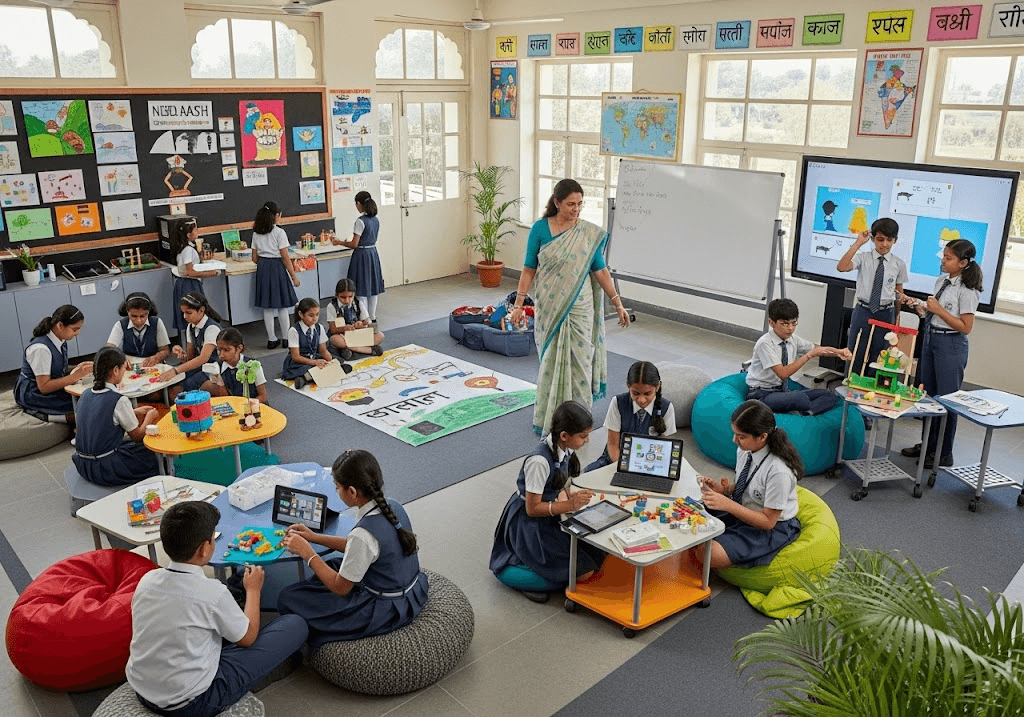
The benefits of smart classroom initiatives implemented by Reliance Foundation extend far beyond the introduction of technology in schools. These initiatives fundamentally change how education is delivered and experienced, creating a more engaging, efficient, and effective learning environment for both students and teachers.
For students, one of the biggest advantages is enhanced engagement. Traditional teaching methods often rely on rote learning, which can be monotonous and less effective. Smart classrooms use multimedia tools such as videos, animations, and interactive simulations to make learning more interesting. This helps students understand complex concepts more easily and retain information for longer periods.
Another significant benefit is personalized learning. Digital tools allow teachers to tailor lessons according to the needs and abilities of individual students. This ensures that no student is left behind and that each learner progresses at their own pace. कमजोर students get additional support, while advanced learners can explore topics in greater depth.
Smart classrooms also promote digital literacy, which is essential in today’s world. Students learn how to use technology effectively, preparing them for future academic and professional challenges. This is particularly important in rural areas, where exposure to technology is limited.
For teachers, smart classrooms provide powerful tools to enhance teaching effectiveness. They can use digital content to explain concepts more clearly, track student progress, and identify areas where students need improvement. This leads to better classroom management and improved learning outcomes.
Additionally, smart classrooms save time and effort. Automated assessments and digital resources reduce the workload on teachers, allowing them to focus more on teaching and mentoring students. This improves overall productivity and job satisfaction.
Another important benefit is collaborative learning. Smart classrooms encourage group activities and discussions, fostering teamwork and communication skills among students. This holistic approach to education prepares students for real-world challenges.
In conclusion, the benefits of smart classroom initiatives are multifaceted. They enhance learning experiences, improve teaching quality, and prepare students for the future. Through its CSR efforts, Reliance Foundation is playing a crucial role in bringing these benefits to schools across India, creating a more dynamic and inclusive education system.
❓ Frequently Asked Questions (FAQs)
What is the Reliance Smart Classroom Initiative and how does it work
The Reliance Smart Classroom Initiative is a flagship CSR program by Reliance Industries Limited, implemented through Reliance Foundation, aimed at transforming traditional classrooms into technology-enabled learning environments. The initiative focuses on improving education quality by integrating digital tools, interactive content, and modern teaching methods, particularly in government and rural schools.
At its core, the program works by creating a complete digital learning ecosystem rather than just installing equipment. The first step typically involves identifying schools that lack proper infrastructure and digital resources. Once selected, these schools undergo a transformation process that includes the installation of smart boards, projectors, computers, and internet connectivity. In many cases, additional infrastructure such as power backup systems is also provided to ensure uninterrupted learning.
However, the initiative goes far beyond hardware installation. A key component is the integration of digital content that is aligned with school curricula. Students are exposed to multimedia lessons, including videos, animations, and simulations, which make learning more engaging and easier to understand. This shift from rote learning to interactive education significantly improves student comprehension and retention.
Teacher training is another critical element. Many teachers, especially in rural areas, are not familiar with digital tools. Reliance Foundation conducts structured training programs to help teachers effectively use smart classroom technologies. This ensures that the technology is utilized to its full potential and leads to meaningful improvements in teaching quality.
The initiative also includes monitoring and evaluation systems. Schools and educators track student performance using digital tools, allowing for data-driven decision-making. This helps identify learning gaps and implement corrective measures in a timely manner.
Another important aspect is sustainability. Reliance ensures that the systems are maintained and supported over time, often involving local communities and school authorities in the process. This creates a sense of ownership and ensures long-term success.
In summary, the Reliance Smart Classroom Initiative works as a holistic education transformation model, combining infrastructure, content, training, and monitoring. It is not just about introducing technology—it is about redefining how education is delivered and experienced across India.
How do smart classrooms improve learning outcomes for students in India
Smart classrooms, especially those supported by Reliance Foundation, have proven to significantly improve learning outcomes for students across India. These improvements are driven by a combination of engagement, accessibility, personalization, and technological integration, which collectively enhance the overall learning experience.
One of the primary ways smart classrooms improve outcomes is through interactive learning. Traditional teaching methods often rely on lectures and textbooks, which can be monotonous and less effective in maintaining student interest. In contrast, smart classrooms use multimedia tools such as videos, animations, and simulations. These tools make lessons more engaging and help students visualize complex concepts, leading to better understanding and retention.
Another major advantage is personalized learning. Digital tools allow teachers to tailor lessons according to individual student needs. For example, students who are struggling with a particular topic can receive additional support through targeted content, while advanced learners can explore more challenging material. This ensures that every student progresses at their own pace, reducing learning gaps.
Smart classrooms also enhance access to quality education. In many rural areas, students do not have access to experienced teachers or high-quality learning materials. By providing digital content and resources, initiatives by Reliance Industries Limited help bridge this gap. Students in remote locations can access the same quality of education as those in urban areas.
Improved attendance and participation is another key outcome. When learning becomes engaging and enjoyable, students are more motivated to attend school regularly. This reduces dropout rates and ensures continuity in education.
Additionally, smart classrooms promote digital literacy, which is essential in today’s world. Students learn how to use technology effectively, preparing them for future academic and professional opportunities. This is particularly important in a rapidly digitizing economy like India.
Teachers also benefit from smart classrooms, which indirectly improves student outcomes. With access to digital tools and training, teachers can deliver lessons more effectively, track student progress, and provide timely feedback. This leads to better classroom management and improved academic performance.
In conclusion, smart classrooms improve learning outcomes by making education more engaging, inclusive, and effective. Through its CSR initiatives, Reliance Foundation is playing a crucial role in bringing these benefits to millions of students across India.
What are the key components of a smart classroom under CSR projects
A smart classroom under CSR projects, particularly those implemented by Reliance Foundation, is a well-integrated system that combines technology, content, infrastructure, and human capacity building. These components work together to create a seamless and effective digital learning environment.
The first and most visible component is digital infrastructure. This includes smart boards, projectors, computers, tablets, and internet connectivity. These tools form the backbone of a smart classroom, enabling the delivery of digital content and interactive lessons. In many cases, additional facilities such as power backup systems are also provided to ensure uninterrupted operation.
The second key component is digital learning content. This is perhaps the most important element, as it directly impacts how students learn. The content is typically aligned with school curricula and includes videos, animations, quizzes, and interactive modules. This makes learning more engaging and helps students understand complex concepts more easily.
Teacher training is another critical component. Without proper training, even the best technology cannot deliver results. CSR projects by Reliance Industries Limited focus heavily on capacity building for teachers, ensuring they are equipped to use digital tools effectively. Training programs cover areas such as using smart boards, managing digital classrooms, and integrating technology into lesson plans.
Another important component is monitoring and evaluation. Smart classrooms often include systems for tracking student performance and attendance. This data helps educators identify learning gaps and take corrective actions. It also allows organizations to measure the impact of their CSR initiatives.
Maintenance and support are equally important. CSR projects typically include provisions for ongoing technical support and maintenance of equipment. This ensures that the smart classroom remains functional and effective over time.
Community involvement is also encouraged. Parents and local communities are often engaged in the process, creating a sense of ownership and ensuring sustainability.
In summary, a smart classroom under CSR projects is not just about technology—it is a comprehensive system that includes infrastructure, content, training, monitoring, and community engagement. Together, these components create a powerful platform for delivering quality education.
How can NGOs apply for smart classroom CSR funding from Reliance
Applying for smart classroom CSR funding from Reliance Industries Limited through Reliance Foundation requires a strategic and well-structured approach. Unlike many funding bodies that operate open application portals, Reliance Foundation follows a partnership-driven model, meaning NGOs must actively position themselves to attract collaboration opportunities.
The first step is ensuring legal compliance. NGOs must be registered as a Trust, Society, or Section 8 Company and should have mandatory certifications such as CSR-1, 12A, and 80G. These are essential for receiving CSR funds in India.
Next, NGOs need to develop a strong project proposal focused on smart classroom implementation. The proposal should clearly outline the problem, target beneficiaries, objectives, implementation plan, budget, and expected outcomes. It is important to highlight how the project aligns with Reliance Foundation’s focus on digital education and rural development.
Networking plays a crucial role in accessing CSR opportunities. NGOs should connect with CSR professionals, attend industry events, and build relationships with corporate stakeholders. Platforms like LinkedIn can be particularly effective for this purpose.
Showcasing past work is equally important. NGOs should maintain a portfolio of successful projects, including case studies, impact reports, and testimonials. This helps build credibility and demonstrates the organization’s ability to deliver results.
Transparency and accountability are also critical. NGOs must maintain proper documentation, conduct regular audits, and provide clear reports on project progress and outcomes. Reliance Foundation places a strong emphasis on governance and expects high standards from its partners.
In some cases, NGOs may collaborate with CSR consultants who have established connections with corporate foundations. However, it is important to work with credible and ethical consultants.
Finally, persistence is key. CSR funding is competitive, and it may take time to secure partnerships. NGOs should continuously improve their proposals, expand their networks, and align their projects with corporate priorities.
In conclusion, applying for smart classroom CSR funding from Reliance requires a combination of compliance, strategy, networking, and impact-driven proposals.
What is the impact of Reliance smart classroom initiatives in rural education
The impact of smart classroom initiatives by Reliance Industries Limited in rural education has been profound and far-reaching. These initiatives have not only improved the quality of education but also contributed to broader social and economic development in rural communities.
One of the most visible impacts is improved student engagement. Traditional classrooms often struggle to keep students interested, leading to low attendance and high dropout rates. Smart classrooms, with their interactive and multimedia-based learning methods, make education more engaging and enjoyable. This has resulted in increased attendance and better participation among students.
Another significant impact is enhanced learning outcomes. Students in smart classrooms have shown improved understanding of subjects, better retention of information, and higher academic performance. The use of digital content helps simplify complex concepts, making learning more effective.
The initiatives have also contributed to digital inclusion. Many rural students have limited exposure to technology. By introducing digital tools in classrooms, Reliance CSR is helping bridge the digital divide and preparing students for a technology-driven future.
Teachers in rural areas have also benefited significantly. With access to training and digital tools, they can deliver lessons more effectively and manage classrooms more efficiently. This has improved the overall quality of teaching.
Another important impact is community development. Improved education leads to better career opportunities for students, which in turn contributes to economic growth in rural areas. Educated youth are more likely to pursue higher education, secure better jobs, and contribute positively to society.
The initiatives also align with national goals such as Digital India, contributing to the country’s vision of a digitally empowered society.
In conclusion, the impact of Reliance smart classroom initiatives extends beyond education. It is creating a ripple effect that improves lives, strengthens communities, and contributes to the overall development of the nation.